
Clean glass is a safety matter before it is a looks matter, because haze and smears scatter light from the sun and from oncoming cars. This guide covers the windows inside and out, the mirrors, the rubber on the wiper blades and the plastic over the headlights.
Glass collects two kinds of dirt. Outside it is road spray, bug residue and the oily film that traffic throws up; inside it is a haze that builds as the dashboard and the upholstery give off vapors in the heat, plus fingerprints and breath. Each needs its own towel and a little patience rather than more product.
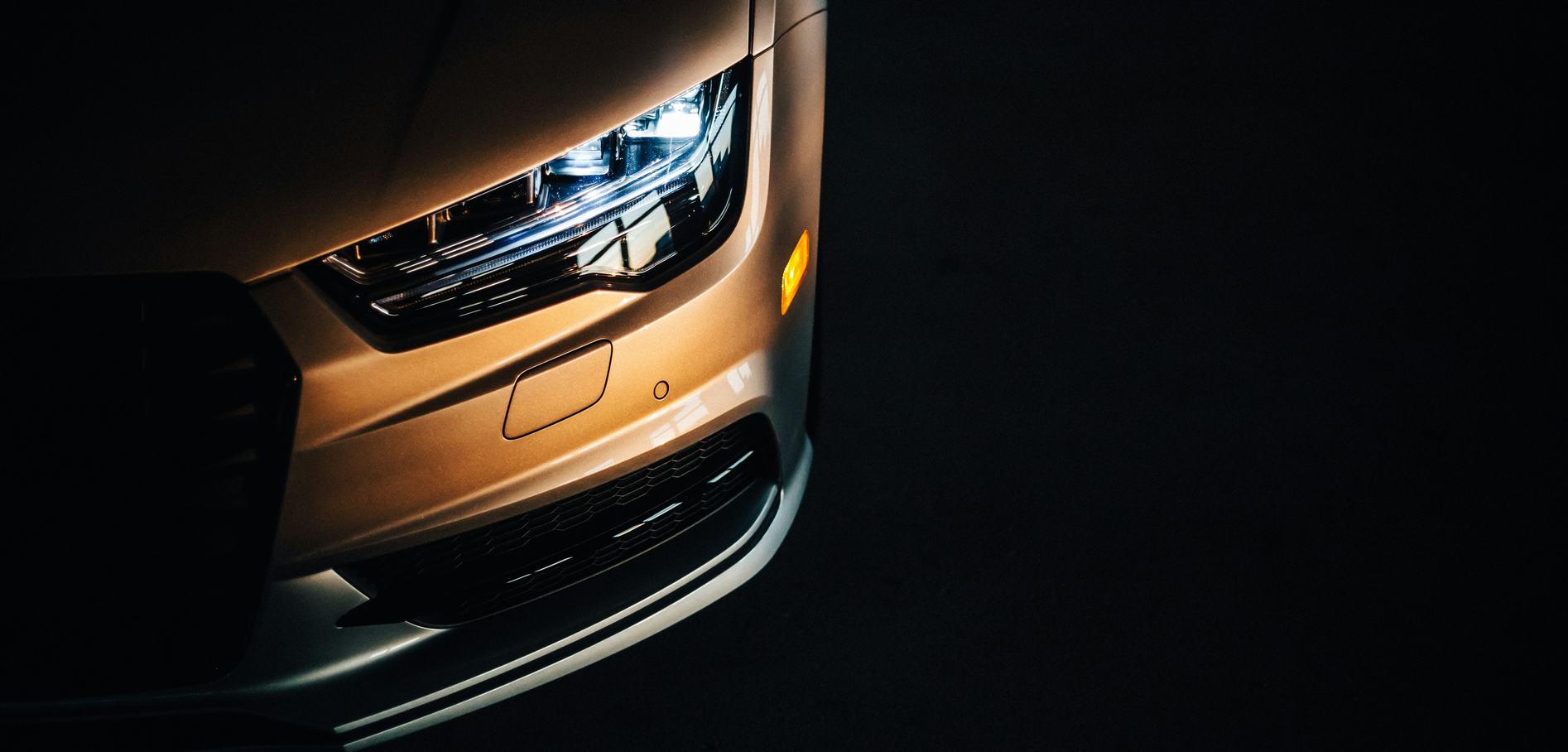
The plastic lenses over the headlights and taillights age differently from glass. Sun breaks down their clear top layer, and the surface turns cloudy and dull, which dims the beam a little at a time. Window tint, the mirrors and the wiper rubber each have their own weak points too, and this guide takes them one by one.
Signs it needs attention
- Oncoming headlights smear into a glowing haze on the inside glass
- Streaks that come back every time the wipers sweep the windshield
- Wiper blades that chatter, skip or leave a band of water behind
- Headlight lenses gone yellow, cloudy or rough to the touch
- Rain that clings to the glass in sheets instead of running off
- Greasy smudges on the mirrors that a quick wipe only spreads
Clean the outside glass first
Work in shade with the glass cool to the touch, because a cleaner that dries as you spread it leaves streaks behind. Wash the car first if it is dirty, so grit on the glass is not dragged around under the towel. Then spray a glass cleaner onto a folded microfiber towel rather than straight at the window, which keeps overspray off the paint and the trim.
Wipe in straight lines, side to side on the outside and up and down on the inside, so a streak left behind tells you which side it is on. Lower each side window a little to reach the top edge that hides inside the seal. Bug residue and tree spots on the windshield may need a second pass with the towel kept damp.
- Glass cool and out of direct sun before you start
- Cleaner sprayed on the towel, not at the glass
- Side windows lowered a little to reach the top edge
Then the inside glass, the mirrors and any tint
Inside, the haze is oily, so a dry towel tends to smear it rather than lift it. Use one towel lightly dampened with glass cleaner to break up the film and a second, dry towel to buff it off. Keep the doors open while you work so the spray does not hang in the cabin, and reach the far corners of the windshield from the other front seat.
Tint film on the inside of a window is softer than glass, and household glass cleaners that contain ammonia can cloud it or lift its edges over time. Read the label and pick a cleaner marked safe for tint, and use a soft towel with no scrubbing pad. Mirrors get the same gentle two-towel treatment, since some carry a heater or a dimming layer behind the glass.
- One damp towel to lift the film, one dry towel to buff it
- Doors open while any spray is in use inside
- A cleaner labeled safe for tint, with no ammonia
Wiper blades and hazy headlight lenses
Wiper rubber picks up grit and road film, and a dirty edge smears the very glass it is meant to clear. Lift each arm off the windshield, hold it so it cannot snap back onto the glass, and draw a damp cloth along the rubber until the cloth comes away clean. Check the edge by eye for nicks, splits or rubber gone hard.
A cloudy headlight lens has lost its clear top layer to the sun, and washing alone will not bring it back. Restoration kits sold for headlights sand and polish the plastic and then add a fresh protective coat, so follow the kit's steps and mask the paint around the lens with tape. Without that new coat, the haze returns quickly.
- Wiper arms lifted and held so they cannot snap back
- A blade that still streaks once clean is worn out
- Tape around the lens before any sanding starts
Keeping the view clear between washes
Keep the washer reservoir topped up, because wipers dragged over a dry, dusty windshield grind grit across the glass and wear the rubber. Wipe the inside glass now and then, more often when the car is parked in strong sun. A water-repellent treatment on the outside helps rain bead and run off, and its label says how often to reapply it.
Clear vision matters more than any shine, so treat damage as damage. A chip or a crack in the windshield goes to a glass shop, since cleaning cannot fix it and a small chip can spread. A headlight lens with moisture inside, or a mirror that has come loose, is also a job for a shop rather than a cloth.
- Washer fluid topped up before the reservoir runs dry
- Inside glass wiped now and then, more often in sun
- Chips, cracks and fogged lenses taken to a shop
The kit
- Microfiber glass towelsA tight, flat weave that buffs glass without leaving lint behind
- A glass cleaner safe for tintLifts film and grime without the ammonia that can harm tint
- Washer fluidKeeps the wipers from dragging grit across a dry windshield
- A water-repellent glass treatmentHelps rain bead up and roll off the outside glass
- A headlight restoration kitSands, polishes and recoats a cloudy plastic lens by hand
- Painter's masking tapeShields the paint and trim around a lens while you work on it
Generic items only; Prime Axle names no products. Read each product's label and follow it.
What to leave out
- Ammonia glass cleaners on tinted windows, which can cloud the film
- Cleaning glass in full sun, where the cleaner dries into streaks
- A razor or scouring pad on the glass, which can leave scratches
- Running the wipers on a dry windshield, which drags grit across it
- Paper towels on the inside glass, which shed lint and smear haze
Questions about glass, mirrors and lights
Plastics and fabrics in the cabin give off vapors, especially in heat, and those settle on the coolest surface nearby, which is often the glass. Breath, hands and air from the vents add to it. Wiping it with two towels now and then keeps the haze thin and easier to lift.
Keep them separate. A towel used on paint carries wax, sealant or polish residue, and that residue spreads across glass as streaks. A towel kept for glass alone, and washed without fabric softener, stays clean longer.
Clean around it gently, but do not count on it staying small. A chip or crack can spread after a jolt in the road or a sharp change in the weather. A glass shop can say if a repair is possible, so ask one to look at it soon.