
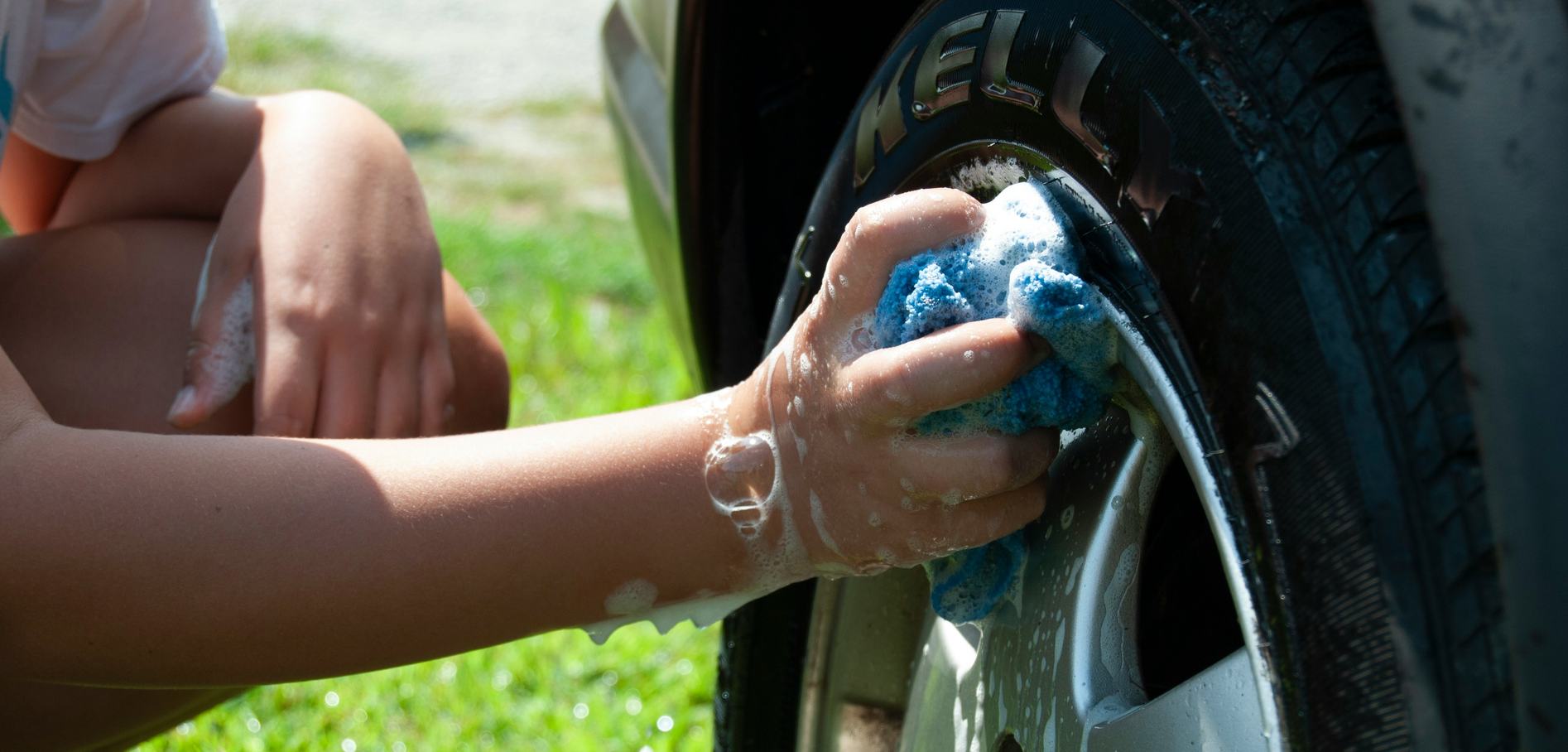
Wheels collect the hardest dirt on the car: hot brake dust, road tar and grime thrown up from the road. This guide covers cleaning the wheel faces and barrels, the tire sidewalls and the wheel wells, then dressing the rubber so it looks cared for without turning slippery.
Brake dust is made of hot metal and pad material, and it bakes onto a wheel's finish if it sits there. Left long enough, it can pit painted and clear-coated wheels. Cleaning with a product suited to your wheel's finish slows that build-up, and it is far easier than removing a crusted layer later.
Clean the wheels with the car parked, the engine off and the wheels and brakes cool to the touch, since cleaner on a hot wheel dries in streaks and can stain. Wear gloves, read the label, and keep wheel cleaner off the brake discs and calipers as much as you can. Use separate buckets, brushes and mitts so brake grit never reaches the paint.
Signs it needs attention
- A dark brown film on the front wheels
- Tire walls that look gray or brown instead of black
- Gritty dust that comes off on your fingers
- Tar spots and road grime inside the wheel barrels
- Mud and leaves packed into the wheel wells
- Old tire shine flinging dark specks along the doors
Start with cool wheels and the right cleaner
Find out how your wheels are finished before you choose a cleaner: painted, clear-coated, polished, chrome and bare alloy each tolerate different products. The owner's manual or a close look at the wheel usually tells you. If you cannot tell, a pH-neutral wheel cleaner is the mild place to start.
Work one wheel at a time so the cleaner never sits long enough to dry. Rinse the wheel, tire and well first to knock off loose grit. Then spray cleaner on the wheel only, keeping it off hot parts and away from the paint, and leave it on for the time the label gives.
- Wheels and brakes cool to the touch
- Gloves on before you pick up the spray bottle
- One wheel at a time, start to finish
Faces, barrels and lug nuts
A soft-bristled wheel brush reaches between the spokes and into the barrel, the inner part of the wheel behind them, which collects the most brake dust. A small detailing brush gets around the lug nuts and the valve stem. Agitate gently, then rinse each wheel thoroughly before moving on, flushing cleaner out of the lug holes.
A wash mitt kept only for wheels can finish the faces once the heavy dust is loose. Never use that mitt or its bucket on the paint afterward, since the metal particles in brake dust scratch clear coat. For tar spots, a dedicated tar remover on a microfiber towel, used with gloves, is gentler than scrubbing.
- A brush for the barrel, a smaller one for lug nuts
- A wheel-only mitt and bucket
- Lug holes flushed out with clean water
Tire sidewalls and wheel wells
Old dressing, road film and the rubber's own browning collect on a tire sidewall. A stiff tire brush and a rubber-safe all-purpose cleaner, used as its label directs, lifts them, and the suds turn brown while there is still dirt to come off. Scrub, rinse, and repeat until the foam stays white.
The wheel well behind each tire holds mud, salt and grime against the fender liner and the metal around it. A long-handled brush and a steady rinse clear most of it. Aim the water away from the brakes and any wiring you can see inside the well, and leave anything bent, cracked or rubbing to a mechanic.
- A stiff brush for rubber, a softer one for wheels
- Scrub until the foam stays white
- Fender liners rinsed from the top down
Dressing the tires and keeping wheels easy to clean
A water-based tire dressing gives the sidewall an even, satin look and slows fading. Apply it thinly with a foam applicator to a clean, dry sidewall, then wipe off any excess so it does not fling onto the paint when you drive. Keep dressing off the tread, the brakes and the wheel faces, because dressed tread can lose grip.
Rinsing the wheels every time you wash the car gives brake dust less time to bake on. A wheel sealant applied to clean, dry wheels helps dust rinse off more easily, though it does not stop it collecting. Keep wheel cleaners and dressings sealed and stored where children and pets cannot reach them.
- Thin dressing, with the excess wiped off
- Nothing on the tread or the brakes
- Sealant on clean wheels to help dust rinse away
The kit
- A dedicated wheel cleanerLoosens brake dust; pick one labeled safe for your wheel finish.
- A soft wheel brush and a small detailing brushReach the barrel, the spokes and the lug nuts without scratching.
- A stiff tire brushScrubs old dressing and browning out of the sidewall texture.
- A long-handled wheel well brushGets behind the tire to the fender liner without lying on the ground.
- Chemical-resistant glovesKeep wheel cleaner and tar remover off your hands.
- A water-based tire dressing and a foam applicatorPuts a thin, even layer on the sidewall and nowhere else.
Generic items only; Prime Axle names no products. Read each product's label and follow it.
What to leave out
- Spraying a hot wheel: cleaner dries into stains
- Harsh acid cleaners on an unknown finish: they can etch
- The paint mitt on the wheels: brake dust scratches
- Dressing on the tread: the tire can lose grip
- Soaking the brakes with cleaner: keep spray on the wheel
Questions about wheels and tires
Let the dressing dry or wipe off the excess first, or it can fling onto the paint. Check that none reached the tread or the brakes, and wipe it off with a clean towel if it did. Take the first few turns gently.
Rubber contains protective compounds that work their way to the surface as the tire ages, and they show up as a brown film. Some dressings and road film add to it. A scrub with a tire brush and a rubber-safe cleaner takes it off, and the brown suds show it is working.
It is better not to. Wheel cleaners are made for heavy brake dust and some are too strong for the clear coat on body panels, while car shampoo alone may not shift baked-on dust. Keep separate products, brushes and buckets for each.